Showing posts with label TAG. Show all posts

Tuesday, February 09, 2021

Double Helix Elpis and TAG Geneva

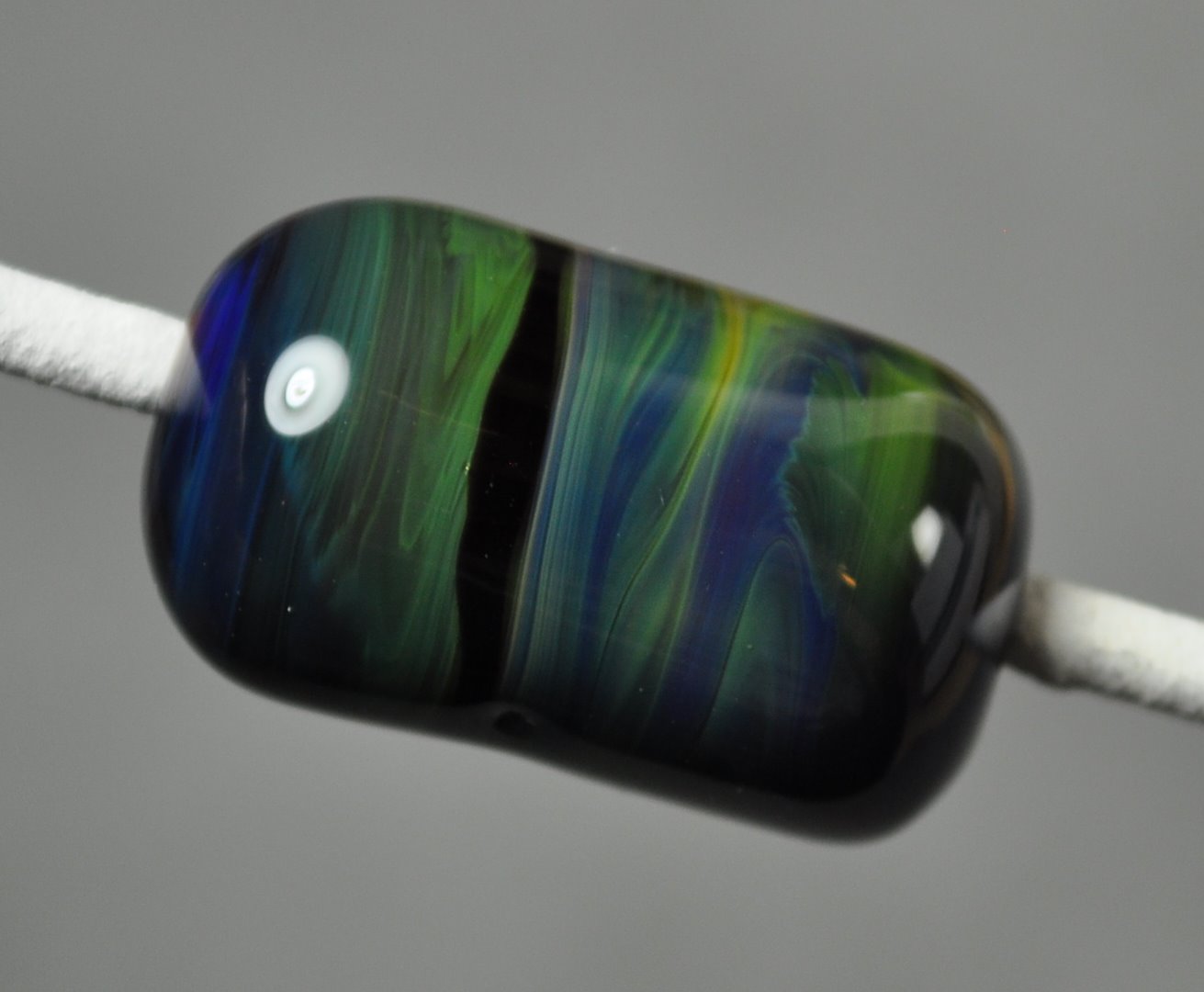
Double Helix Elpis and TAG Geneva. Elpis is a light transparent Peridot color that reduces to a golden luster with rainbow accents. Geneva is a medium transparent blue that appears as a greenish glass with a rich blue lustre after reducing.

I am having a lot more success with retaining The Luster's from reduction on the glass after I reduced the annealing temperature in my kiln. I think my thermometer/pyrometer on the Kiln is reading a little high. I reduce the temperature by 10° (at a time) from the annealing temperature of 960 which is where I generally keep it for the Lauchas that I use, until it is now garaging around 875. That's a big difference. But I'm not having any issues with cracking, so I am just assuming that the pyrometer is reading a different temperature from actual. I actually tried another to check the temperatures but it wasn't working either, so at some point I'll get another but for now it's fine.

#dragonjools #softglass #lampwork #colortesting #colourtest #flamework  #norteltorches #nortelarrow #doublehelixglass #tagglass 


Wednesday, May 20, 2020

TAG 104 Dalai Lotus

Well, that this is Dalai Lotus tells you something about how old my stash of glass is. 

The horse is Dalai Lotus, the mane is Reichenbach Deep Black, and the bass bead is copper green Plus avorio Ivory and light avorio lapis. 

 and the second picture is the hot shot, before it went into the kiln.

Saturday, December 23, 2017

Fire Lotus is back

After a lengthy break - Trautman is again making COE 104 Fire Lotus. Hallelujah!

Fire Lotus is the one of the easiest to get reliable purples out of -  heat it to clear, let it cool, strike in the flame.

Hello Fire Lotus, I've missed you. Welcome back.

Friday, February 17, 2017

More Glass History: Precision 104 & TAG

I mentioned recently that Rocio Silver Mist was a colour made by Northstar - a company probably better known for their borosilicate glass. Northstar calls their 104 COE glass Precision 104. Likewise, with the rise in popularity of the exotic, high-end colours, Trautman Art Glass, another primarily boro-focused glass company, also produced some 104 COE colours, like the Golden Emerald and Lake Geneva still listed on their site, and the arguable more famous Dali Lama, Tibet, Fire Lotus, etc. Trautman's offerings are known as TAG.

So far as I know, both of these companies are not currently producing 104 COE glasses, as they are focusing on their core COE 33 boro lines. There was something of a kerfuffle in the art glass industry last year around EPA regulations and emissions, principally driven by some reports of finding higher than usual levels of heavy metals in industrial areas that have glass factories in them. This had the result of shutting down some of the manufacturers for a while, and, as you might imagine, small manufacturers of art glass materials live pretty close to the edge in terms of finances. Shut them down for a week and tell them they must spend thousands on scrubber equipment, and you can easily kill them. Especially annoying when spending thousands on scrubber equipment is something that you have just done.

This even created runs on some Boro colours, as the fear was they they would never be produced again. So I suspect that they are concentrating on their core business, which strikes me as a sound business decision. And heaven knows, I want to see all the glass companies succeed. It's better for the artists, artisans and craftspeople (depending on how you see yourself) all around.

Northstar primarily named their colours for people and famous artists:

SPC401 Rocio Silver Mist
SPC402 Picasso Silver Blue
SPC403 Chagall Dark Silver Blue
SPC404 Monet Silver Amethyst
SPC405 DaVinci1 Transparent
SPC406 DaVinci Dble Amber Purple
SPC407 Van Gogh Caramel
SPC409 Kandinsky Green Exotic
SPC410 Matisse Red Exotic
SPC411 Rembrandt
SPC412 Sashas Silver
SPC413 Garzoni Giovanna
SPC414 Black Pearl
SPC415 Abes Ivy


TAG's glass names have a more eastern influence, such as Dali Lama and etc.

They have a wonderful working tip resource on their site, which I will also reproduce here, just in case.

Working Trautman Art Glass (COE 104): Color by Color Soda-Lime Color (Soft Glass): COE 104; Anneal at 945 Fahrenheit (Juno [TAG-104-10] at 975)


DALAI LAMA (TAG-104-01)
An amber-purple glass, similar to our Caramelo, but in a soft glass. Opaque. Most batches respond well to deep heating in the gather, before applying to your bead. Dalai can appear to boil a bit when white hot, but those bubbles disappear as it cools. Shape in a hot neutral flame, and cool until no longer glowing; it may even blush amber. Then strike in a neutral-to-oxidizing flame for beautiful effects, generally ranging from light Painted Desert or jasper (especially if not deeply heated first) to dark reddish purples (when first activated by deep heat.) Or reduce for a different, earthier look. Colors range from tans and ambers (particularly when reduced) to blues and greens, and gorgeous pinks and purples when struck hot. If you are not getting purples, you’re likely not cooling the glass enough between heating and striking. Dalai encases well, and retains reactive effects under clear.

ZEUS (TAG-104-02)
This glass appears crystal clear in the rod, but changes dramatically when reduced, then struck. Zeus turns amber by itself and over light colors. Over black, it’s reduction film can be struck to a range from royal blue to turquoise to green. Can also be reduced further to amber brown opaques. Encases well, and the reaction often gets more opaque under clear. Try it over oranges or reds for a great electric purple! On striking gold-ruby, Zeus can make a peachy color. It’s turquoise over purples.... etc etc!

BLUE BUDDHA 2 (TAG-104-03)
Discontinued. (See Cezanne.)

CLARITY 4 (TAG-104-04)
The holy grail of bead makers is a perfect clear. We think we are close! Resists scumming and is optically superior to many commercial 104 clears. Clarity 4 likes a neutral to slightly oxidizing flame; play with your torch settings if you get scum. Clarity 4 is designed to be quite soft for easy encasement, but softer glasses don’t always like to be on ‘top.’ You may want to make a core of Clarity under your opaque 104 if you intend to heavily encase with Clarity to eliminate the chance of cracks.

OXBLOOD (TAG-104-05)
A self-striking dark grey/brown rod that can make at least three colors when flameworked. It oxidizes to black, reduces to a grey, and, with super-heating and further reduction can produce subtle terra-cotta and brick reds. Very earthy. Also makes a good base for silvered colors. Oxblood makes a very nice black on ivory, which resists “bleeding.”

BLACK CHERRY [Kiln-Strike Red] (TAG-104-06)
This red glass kiln-strikes into a range from light red to super-dark antique ruby red. Can be reduced. For best results, bring red back up to a high, even heat (transparent) to “reset” the strike before placing in the kiln. Kiln striking is dependent on a relationship between time and temperature: in general, the hotter the faster. But too long and/or too hot can cause livering. Rods come red; they have been pre-struck for color verification at the factory.

TO DETERMINE STRIKE TIME FOR YOUR BATCH OF BLACK CHERRY: Bring empty kiln up to your usual annealing temperature. Make a small bead, then torch it up to high even heat for “reset”, and cool it enough to place in the kiln. After a half-hour or so, check it every ten minutes. When it reaches the color you want, make a note of the time. That’s how long you will want to anneal your Black Cherry beads to achieve the perfect red! We suggest you make your Black Cherry beads at the end of your working session, and then run the anneal cycle long enough to kiln-strike your red at the same time. Sorry, out of stock at this time!

TIBET (TAG-104-07) TRANSCENDENTAL (TAG-104-01-Trans)
Just like the classic reactive amber/purple boro, now in a 104 soft glass! A transparent version of Dalai Lama, this amber/purple glass strikes easily in a neutral flame, producing greens over black, or blues and purples alone. Tibet can go pinkish over ivory glass or other light colors. Solo, struck Tibet looks reddish when held to the light. Best results come from striking in a neutral to oxidizing flame. This glass can also be reduced for a different look. Try it on Moretti copper green! Tibet does not generally require deep heating, just light striking. Transcendental is a darker version of Tibet; it can have a skin that is translucent, or even opaque. It also strikes easily and does not require deep heat – however, Transcendental can become cloudy with long hot working. It can be cleaned up a bit with cooling the bead, then burning off the silver haze in a strong oxygen flame.

CEZANNE (TAG-104-08)
A more reactive cobalt-purple relative of “Blue Buddha.” Reduces easily. Gains a beautiful mirror-like finish with full reduction in an un-oxygenated flame. When reduced with oxygen, Cezanne tends to give more greens. The reduction finish is encaseable. Occasionally boily; if so, add a pinch more gas and work higher in the fire.

TAXCO SILVER TURQUOISE (TAG-104-09) TAXCO LIGHT (EXP-102808)
Pronounced “TOSS-ko”, this glass is named for the town in Mexico renowned for combining silver and turquoise. A transparent reactive glass that produces a shiny mylar surface when reduced without oxygen, or gives a mottled oil-spot look when reduced lightly with some oxy in the mix, particularly over black or other dark colors. Alone, Taxco can reduce to a silvery sheen over the blue-green base. Heavy reduction gives white clouds with copper and terra cotta patches. Taxco likes to be reduced when still barely glowing a light orange – but too hot and reduction burns off, and too cool it won’t stick in the kiln. If it’s a tad boily, turn up the gas & work higher in the fire.

JUNO (TAG-104-10)
Note: Does not work with every brand of clear104 glass; we recommend TAG Clarity for encasement of Juno. She also requires a higher anneal (975 to 980 F) and slightly longer soak time. The wife of Zeus, Juno is pretty and pink; a reducing glass that also strikes. When reduced alone, she can go amber, and can develop a metallic sheen. But, like Zeus, Juno’s reduction haze can be intensified, brightened and made more opaque by striking it. Her reduction haze ranges from greenish to bluish to pink/purplish, depending on the batch and the background color. The reduction haze is enhanced with encasement. Juno also strikes in a neutral to oxidizing flame, with an unusual yellow glow. For an interesting effect, try simply striking Juno on a base of Moretti dark ivory, for a range of colors from pink, purple, periwinkle and even coppery hues! However, overworking Juno can burn out her color. In general, “3 strikes and you’re out.” Also, applying Juno cooler gives more purples over ivory, while heating the rod more in advance tends to produce more copper colors.

GOLDEN EMERALD (TAG-104-11)
This is a pale green transparent reducing glass, similar to our Taxco. Golden Emerald’s effects also differ over a light or dark base glass, and by how much oxygen you use in your reduction flame. When reduced with little or no oxygen, by itself, the Golden Emerald takes on a golden metallic sheen over its transparent golden green. When reduced with some oxygen, on a dark base glass, Golden Emerald produces strong metallic oil-spot colors of purple, blue, electric green, and more. It is difficult to encase the reduction on Taxco and Golden Emerald.

LAKE GENEVA (TAG-104-12)
A pretty transparent medium blue reducer, Lake Geneva can make super-metallic effects when reduced with little or no oxygen, and a thicker, more opaque reduction film when reduced with some oxygen in the mix. In general, the Lake Geneva makes blues, greens and some purples when reduced. The reduction can be made more opaque by ‘striking’ it. The reduction can also be encased for Mother of Pearl effects.

MONTREUX (TAG-104-13)
Pronounced "MON-tro", this glass is named for a town on the shores of Lake Geneva, Switzerland. A lovely transparent medium purple reducer, Montreux can make super-metallic effects when reduced with little or no oxygen, and a thicker, more opaque reduction film when reduced with some oxygen in the mix. The reduction can be made more opaque by ‘striking’ it. The reduction can also be encased for MOP effects. In general, Montreux’s reduction colors range from blues and greens to purples, but the base color can also vary from amethyst to light raisin to medium ink purple. Inky blue-purple is now standard for Montreux.

DEEP PURPLE (TAG-104-14)
A luscious deep dark transparent purple, Deep Purple reduces with super-metallic effects with little or no oxygen, and gains a thicker, more opaque reduction film when reduced with some oxygen in the mix. The reduction can be made more opaque by ‘striking’ it, and it can also be encased, trapping a beautiful mother of pearl. Deep Purple generally reduces with blues and greens, but can also create purples, pinks and even bronze-like tones in the metallic sheen. The density of the color also lends itself well to thin applications, including stringers.

DALAI LOTUS (TAG-104-16)
Our Lotus recipe brings the Dalai Lama striking 104 into even more beautiful territory. Dalai Lotus rods range from opaque tan, to translucent amber, and, like any striking amber-purple they produce the amber-to-purple-to-blue transition.... but THEN they keep going! To green, and yellow and orange and magenta and violet.... and??? This recipe likes more heat than the regular Dalai recipe, both in the initial gather and in the repeated strikes. It also likes to be cooled much more before re-striking. In other words, this is a glass that really likes long, hot working and cool marvering. Encases well, but also keeps color well in the kiln, even if left un-encased. For best results, bring the gather to WHITE hot, then add Lotus to your bead base, cool until no longer glowing, and then – wait more! You should see the glass ‘blush’ amber. This is what will continue to strike. If you overstrike, you can reset Lotus by reheating back to transparent.

FIRE LOTUS (TAG-104-15)
This is Dalai Lotus, with the addition of a kiln-striking red. So, you work this glass just like Dalai Lotus, lots of heat, and a significant cool-down, then strike away... Generally, Fire Lotus beads look the same at the end of a normal, 950 anneal as they did going into the kiln. But a boro-hot anneal cycle can change ambers into pinks. You can also put your beads into the kiln at 1000 degrees, and hold at the hotter temperature for an hour or so, then drop to a regular 104 anneal cycle, to further develop the reds and purples in this glass if you did not like your initial strike colors. This gives you more control over your final look. Like Dalai Lotus, Fire Lotus likes a WHITE-hot start, and significant cooling between strikes. You can also reset the strike by returning the bead to transparent with high heat. This is particularly useful if your colors begin to look washed-out or overstruck. But in general, Fire Lotus doesn’t overstrike, it gets “poo” colors from not allowing the glass to cool enough between strikes. The amber blush is your friend!

BLUE LOTUS EXP
These blue-grey rods strike in flame like their Lotus-family cousins, above – work hot with longer cooling periods in between strikes and the Blue Lotus will reward you with blues, turquoise, greens, and purples. Not a kiln striker. Just like the other Lotus colors, best strikes come after the glass cools then ‘blushes.’

GREEN JELLY OPAL (TAG-104-EXP-041510)
A milky green rod that really likes it hot. Jelly Opal is a striking glass that primarily strikes amber, but also gives wispy opalescent blues and greens, especially with cycles of striking and reducing. This glass generally responds to repeated deep heating, followed by long cooling cycles. Benefits from rapid cooling, too, with brass tools. Try heating the gather until white hot, wrapping your bead, deep heating again on the mandrel, marvering into shape, cooling, and then striking. You can get different effects from striking right on the candles of your torch, or with encasement.


Monday, January 02, 2017

TAG: Dalai Lotus

Here's what TAG has to say about Dalai Lotus:


DALAI LOTUS (TAG-104-16)
Our Lotus recipe brings the Dalai Lama striking 104 into even more beautiful territory. Dalai Lotus rods range from opaque tan, to translucent amber, and, like any striking amber-purple they produce the amber-to-purple-to-blue transition.... but THEN they keep going! To green, and yellow and orange and magenta and violet.... and??? This recipe likes more heat than the regular Dalai recipe, both in the initial gather and in the repeated strikes. It also likes to be cooled much more before re-striking. In other words, this is a glass that really likes long, hot working and cool marvering. Encases well, but also keeps color well in the kiln, even if left un-encased. For best results, bring the gather to WHITE hot, then add Lotus to your bead base, cool until no longer glowing, and then – wait more! You should see the glass ‘blush’ amber. This is what will continue to strike. If you overstrike, you can reset Lotus by reheating back to transparent.

And these looked gorgeous going into the kiln. And what did I get out? Mud.


If I overexpose the photo - you can see that there is some pretty cool stuff going on, but unless the plan is to walk around in a spotlight all the time ... 

Harrumph. 

Saturday, August 30, 2014

TAG 104-15 Fire Lotus

The "word on the street" (ha ha) is that Fire Lotus is yummy and easy to use - easier than some of it's cousins.

I think I might have to concur with this as these did come out pretty nice. Some of these striking glasses look very nice when hot, and once they come out of the kiln, they look dark. Oh, if you get enough light on them, they can look ok in a photo, but they just look dark the rest of the time.


The bottom row is, left to right, encased with clear, partially encased, and self-coloured - struck once.

The top row is all three, un-encased, struck once. I like the encased and partially encased ones best. Looks like encasing is the way to go with this one.

Tuesday, February 18, 2014

Zeus over Raven Sky

 The only thing of real interest from the other day's kiln full of meh was this - TAG Zeus over Effetre Raven Sky.

Given that Raven Sky is black and white, this shouldn't be a surprise.


This is Zeus over black. We know that Zeus does this thing. 


It did come out extra streaky, however.

I wonder if it is the type of black, or the way it was worked more than just a spacer.

I'd hate to cover up Raven Sky if there is another alternative.

Of course, streaks of Zeus instead of full encasement might look good. Hmmm.


Sunday, February 16, 2014

Zeus over Clio

Experimenting with TAG Zeus layered over Double Helix Clio.

Still not quite what I was going for.

Not too bad, but not what I wanted.

Friday, February 14, 2014

TAG Juno

Self-coloured Juno.

Top row, lightly struck.

Bottom row, reduced, left reduced cool; right, reduced hot.

Note - top row - one has retained it's pinkiness w/o turning gold.

I thought I read that Juno moves to coppery when overheated, but now I can't find it again. Damn.

TAG's website suggests trying it over ivory, and to not encase it deeply.

Wednesday, February 12, 2014

Aion2 and Zeus

I include this, not because it has particular merit, but for my own reference, as I haven't included self coloured Zeus before.

Top row, Aion2, lightly reduced. Bottom row, Zeus, lightly reduced.


Zeus is usually layered over black, so you don't see it by itself much.

Zeus is from TAG, Aion 2 is from Double Helix.


Saturday, December 24, 2011

TAG Tibet - Opaque vs Clear

Tibet, from Trautman Art Glass - is "a transparent version of Dalai Lama"  - according to their website. So imagine my surprise when the latest batch that I picked up was opaque in the unworked rod.

The opaque variation is significantly easier to strike!

Here we have, the Tibet (Opaque) on the left of the black line, with significantly more colours - and Tibet (Clear rod) on the right.

Same bead, different side.
All of these are the Tibet-clear rod, and encased. The two on the left just would not strike. The two on the right struck - but I'm not that enamored of the colour.
These four are the Tibet-opaque - you can see that I had a lot more success with these! These are also all encased.

Here we have, three on the right that are the Tibet - opaque, and the two on the left, were a mix of the clear and opaque. All are encased.


I'm gonna scoop up all of this batch I can get my hands on - it is waaaay nicer to work.


Thursday, December 22, 2011

TAG Dalai Lama vs Dalai Lotus

In my latest bundle of TAG glass - something labeled Dalai Lotus.

Here is the same bead - showing all sides. The Dalai Lama is on the left, the Dalai Lotus on the right. They seem fairly similar, except their seems to be some purples and reds in the D. Lotus on one side. Given the vast range of colours in these glasses - it's fair to say that one bead does not a test make. ;-)


Either glass sure is impressive though!

BTW - that is a band of black separating the two colours - simply for reference purposes.

These are all Dalai Lotus, encased.  


And this is the Dalai Lama - encased.

Ain't this a beauty? It started as three beads side by side (Tibet - clear) - which got away from me, so I filled in with Dalai Lama, added a few trails of Triton, and encased it and marvered it.

 Here you can see what was where.

This was similar - but mashed. Never got this one to strike to my satisfaction, however. 


Some days - the glass just sings for you. On those days - just work until you drop. ;-)


Thursday, November 24, 2011

More on Fire Lotus

I continue to play with Fire - Fire Lotus that is! These two dragon eyes have Fire Lotus frit for the pattern on the iris of the eyes, and also Fire Lotus (rod) for the lids.


I think these are working out nicely because the method of working them coincides nicely with how Fire Lotus wants to be worked - which is, get it white hot, let it cool and blush amber, then re-heat. To make the eyelids - I get a big gather very hot, and form the upper eyelid - then leave it alone while I go make the lower lid. Then I go back to shape the ridges in the upper eyelid - the process of which strikes the upper lid. Then the same for the lower lid, and ditto - it strikes the lower lid.


Sunday, September 04, 2011

Reichenbach104 9203: Deep Black


I picked up a sample pack of the Reichenbach 104 COE line of glasses. Reichenbach, apart from the Falls which was the location of Sherlock Holmes's death scene - is a company known for it's furnace glass and has been in use as intensely coloured frit by lampworkers for some time. Most of their offerings have been 96 COE - and so I was really interested to see that they were bringing some 104 COE rods to market. Woohoo.

Coincidentally - a reader (yes - this blog has readers. Well, two anyway - you and someone else) - said that he had tried a bead with the RB104 Black and has gotten some unusual results - devitrification on the surrounding bead.

So I decided to start with the black. The black I used was Deep Black - and it is a wonderful, inky black.

Here it is, hair fine stringer on Tag Clarity (Clear).


That little yellow chip in the top right corner is from sticking to another bead.

Horizontal stripes on a white bead, superheated and swirled, resulted in a lovely bullseye candy bead - black, white, grey, ...

but with an odd blue-green streak - which, when cooled - stayed blue. Weird - almost like there was some sort of contaminant on the glass. I suppose I could have accidentally picked something up on the rod - although I don't remember doing so. It might have been in the rod too. We'll have to wait and see if it happens some more.


I did not have any devitrification, but it appears that Reichenbach has more than one black, and one of them reduces to silver - like Effetre Metallic Black and CiM Gunmetal.

And to compare head to head - here is the fine stringer Belladonna Black Diamond on Effetre clear bead from the other day, (top bead) with the Reichenbach Deep Black on TAG Clarity clear (bottom bead.) The RB Deep Black is, in fact, an inkier, blacker black. And, fwiw - the Clarity is a heck of a lot clearer too.

Friday, July 01, 2011

TAG Fire Lotus - a work in progress

I had another go at TAG Fire Lotus this week. I actually spent some time on the phone with Jenny at TAG - because I was struggling with it so much.

She told me to get it clear-hot in the gather before applying to the bead - and bring it down close to the torch face - down into the candles - and look for the white rectangle that forms on the bead. After that - apply the glass to the bead, shape and cool. Really cool. Once you've gotten the glass that hot - it's going to take a while. So let it cool until you're sure the bead will crack when you bring it back to the flame.

The glass will go amber once it has cooled - a pale, possibly wispy amber. But wait.Wait some more - it will go darker. Then reheat to red hot, cool again. Repeat the cooling and heating cycle for more colours.

And, she said, if it gets stuck in the "poo zone" (sh1tty brown colour) - re-heat to clear and start again. Love that. The "poo zone." Yep - know what that means!

My other question was - what should it look like when it goes into the kiln? and the answer is - it's going to come out looking like it went in. (Use a strong, local light, like a desk lamp, so that you can really see the colours, and override the effect of the heat on the colours.)


I thought I had been getting it really hot - with the mid-range - you tend to get things hot - but I was loosing control of the glass before it went clear. I was getting translucent amber with an opaque, wispy core. So - for this round - I used a mega minor and tanked oxygen for a tighter, more intense flame (that wasn't going to burn through the mandrel!)

And this time - I really did get it to clear hot. And I brought it down in the flame, and whoosh - white, opaque rectangles bloomed where the flame hit the glass at it's most intense. And I slapped it on the base bead (clear) - and then I heated it some more, and it truly did go clear. Then I let it cool. It cooled enough to crack the bead, but as it hadn't fallen off the mandrel - I kept going. It really did go amber, and then a darker shade.

Not sure how many time I cycled through the cooling and heating, but this is the bead I got. This is a clear base, Fire Lotus in the center, and black ends added.


Well, that was fairly dramatic - let's try that again. Let's have something to do while the bead cools - let's make another beside it. Hmmm - that went all wonky. Fill in the middle, mash it. Aw, heck. This is clear, with Fire Lotus, and black in the middle, and a funky shape.


Again, Fire Lotus over clear. Honestly - no idea what happened here - this looks like some sort of copper reaction. Kind of interesting.
Can we work it small? Three small spacers, made at the same time, base of clear.
Well - this is all well and good, but what can you DO with it. Let's try making a dragon eye. This is a dragon eye, the lids are Fire Lotus, with Clio dots.

Here's another, a plain one. The iris is Fire Lotus and clear - I was going to make a cabochon, but I just couldn't resist turning it into an eye, so I stuck a pupil into it (Eff. Black - bad idea. It bled. Oh well.) The lids are Fire Lotus.
This bead got away from me - I had to reheat it back to clear and the whole bead turned liquid and the Fire Lotus got mixed in with the clear in the process of rebalancing and getting the shape back. It's pretty cool - although in real life - it's quite dark.

So - better success this time. In a nutshell:
  1. Really, really heat it. Clear.
  2. White Bloom.
  3. Cool to amber,
  4. dark amber.
  5. Reheat.
  6. Cool and reheat for more colours.